Sunday, October 23, 2022

camouflage tricks behind the scenes in hollywood

Boston Globe, June 15, 1921
Anon, Movie Facts and Fancies, Boston Globe, October 1, 1921, p. 12—

The studio scenic artist of today…is an expert camouflage artist and a perfect copyist. The controlling principal in his work, however, is the photographic value of colors. Under the eye of the camera colors are often very deceptive, and often a color, which seems lighter to the eye than another color, might on the screen register a darker shade of gray than that color.

Often two colors which seem to form a most artistic and beautiful combination to the human eye, will, when photographed, present a most inharmonious, discordant color scheme, which is very ugly to look upon. Only by a careful study and a perfect knowledge of the photographic values of colors does the scenic artist avoid such color clashes.

The art of camouflage also is a very important phase of the studio scene painter’s art. He must make the imitation appear exactly like the real. Some of the commonest of such problems are included in the following examples: The camouflage of compo[sition] board squares and the proper laying of them so that when photographed they resemble a tile or stone floor; the painting of surfaces so that the result photographs like bronze, gold or other metals.

The artist can, with a well-placed strokes of his brush, dipped in the right kind of paint, make a new brick wall like the side of a dingy tenement house. He can give to a new redwood panelled wall the effect of an oak panel, hundreds of years old.

Saturday, October 22, 2022

Frank Bird Masters: ship camoufleur and photographer

In July 2020, we posted on this blog an account of the launching (on July 29, 1918 at Tampa FL) of an American merchant ship, the SS Everglades. As we explained at the time, it was the first ship in which a camouflage pattern was applied while the ship was still under construction, and in advance of its launching.

In that post, we talked about Maurice L. Freedman (1898-1983), who was a District Camoufleur for the US Shipping Board, assigned to Jacksonville FL. Freedman is of interest because, following the war, when he enrolled as a student at the Rhode Island School of Design, he donated to its library a nearly complete set of the colored lithographic plans for “dazzle camouflage” schemes that were designed by US Navy camoufleurs in Washington DC. That rare collection has survived and remains in the library's archives at RISD in Providence.

In that same post, we also shared information about another Florida-based ship camoufleur named Frank Bird Masters (1873-1955), who was present at the launching in Tampa, and who was apparently in charge of applying the camouflage scheme to the SS Everglades.

More detail is in our original blog post, but it may be sufficient to say that Masters was a magazine and book illustrator who had initially studied science and engineering at MIT, graduating in 1895. A few years later, he changed his profession to that of an illustrator, and studied with well-known artist Howard Pyle. In 2018, it was revealed in an article in The Guardian (London) that Masters was also an all but unknown “early modernist” photographer, who used photography to make reference images for his illustrations. Most of his photographs were cyanotypes, one of which is shown above.

Only a few days ago, I was fortunate to run across an online statement, written by Masters in 1920, in a book of first person updates by members of the MIT graduates of 1895. Reprinted below, it provides a postwar account of his service as a camoufleur.

•••

Frank Bird Masters, “Camouflage and Camoufleur” in Class of 1895 Book: 25th Anniversary, MIT. Boston, 1920, pp. 162-163—

Much has been written about “camouflage,” but nothing authentic has been published about marine camouflage except one magazine article: “The Inside Story of Marine Camouflage” by Everett L. Warner USNRF in Everybody’s Magazine, November 1919. Because of the popular misconception of this subject, [the following] notes may be of interest:

Although all sorts of ingenious attempts were made to really “camouflage” ships, all were futile from the point of view of the submarine, for no paint could make a moving ship look like its background—the sky. So, instead of protective coloration, the basis of all camouflage, “dazzle painting,” was developed during 1918, not to make a ship unseeable, but to make it unhittable by deceiving the submarine commander as to the actual course of the ship. Reverse perspective, not only of lines and masses, but of color and other optical devices made the ship appear, through the “sub” periscope, to be on a course several points off its true course, thus making the sub commander’s calculations wrong and the torpedo attack ineffective. But a very small fraction of one per cent of the “dazzle painted” American ships were torpedoed.

After the establishment of a Camouflage Section, early in 1918, the Navy Department took over all production of “designs,” and the work of applying the dazzle painting to all ships was put under the sole supervision of the US Shipping Board Camoufleurs. The Camoufleur was Uncle Sam’s boss on the job. With the aid of two painters the ships were “marked out,” the “design” being carefully adapted to the ship’s variation from “type,” then the painting was carried on under the direction and supervision of the Camoufleur, who kept in constant touch with the District Camoufleur’s office, turning in daily reports of all camouflage activities.

[I, Frank B. Masters] Camouflaged Morey’s first ship, the Bedminster, at Sachronville in August 1918.*

After a period of intensive training in the “inside dope” of designing at the Camouflage Section of the Navy Department at Washington DC, in September 1918, I was fortunate in being able to devote considerable time to experimental work and original design—helping to develop a “camouflage testing theatre,” through the periscope of which camouflage scale models were tested under all conditions of light, atmosphere, etc. Developed a method by which a sketch could be quickly made showing the appearance of camouflage ships from a point of view 3 or 4 points off the bow—a sure test of the effectiveness of a new design. Made many photographs of models and all sorts of drawings for the US Shipping Board Report on Camouflage which I understand has been turned over to Prof [Cecil Hobart] Peabody and MIT.


* As of this writing, I have not been able to find what the term “Morey’s” refers to, nor further information about a ship named Bedminster, or a location called Sachronville. I have found that the same camouflage pattern used on Bedminster was also applied to the SS Alvado, SS Lake Osweya, and SS Lake Pepin.

Monday, October 17, 2022

a motley-looking crowd of the weirdest description

USS Wakulla (1918) in dazzle camouflage
Anon, CRUISE WITH A DESTROYER ESCORT in La gazette de Hollande, April 13, 1918—

We were in the harbor of a famous Southern port [in England] on board the leader of a destroyer flotilla ready to start on one of its ordinary cruises as escort to merchant convoys. It was a cold, bleak stormy day, with a cross sea running in the Channel. One after the other the members of the flotilla cast off from the buoys, and slipped silently seaward. In the outer harbor were the huge merchantmen we were to escort into the comparative safety of the broad Atlantic. They were a strange motley-looking crowd, with a camouflage appearance of the weirdest description, calculated to send Futurist artists into ecstasies. These weird-looking vessels followed the destroyers in single file out of harbor at slow speed until well out into the Channel. There they were formed up and made into as compact a crowd as possible. A destroyer in front and others on each flank constituted a protective screen. After we had got well out and had lined up our escort full speed ahead was ordered, but that was full speed for the convoy only. The destroyers were at about halfspeed, and this was partly expended in zigzagging. To and fro, without a moment’s respite, the leader proceeded in front of the convoy, always about 500 to 600 yards ahead, as though showing to timid followers that it was perfectly safe to follow where we led. On the flanks other destroyers kept up the same zigzag procedure, and astern yet another zigged and zagged and did her best to keep the rearmost ships up to the full convoy speed.

Sunday, October 16, 2022

Caligari, distorted film sets and WWI ship camouflage

Above
USS Nantahala
in dazzle camouflage scheme (1918).

•••

Herman George Scheffauer, “The Vivifying of Space” in The New Vision in German Arts. London: Ernest Benn, 1924—

[his description of The Cabinet of Dr. Caligari] Trees are resolved into conventionalized, constructed forms; foliage becomes a mass of light, dark and shaded crescents, rounds and silhouettes—brilliantly colored in the original scene. Floors and pavements are streaked, splashed and spotted, divided and decorated in bars, crosses, diagonals, serpentines and arrows. The walls become as banners or as transparencies, space fissued by age, or as slates upon which the lightning blazes strange hieroglyphs; or they become veils and vanish in a mosaic of scrambled forms and surfaces, like a liner in camouflage.

Gaunt chimneys rear and slant like masts in this city storm. Cunning lines of composition and the adroit use of diagonals drive the perspective into an invisible “vanishing point.”


For more on the Caligari film sets, forced perspective, and other early avant-garde cinema, see Part Three of my recently posted video trilogy on the Ames Demonstrations here.


Thursday, October 13, 2022

David Williams / Dazzle, Disruption and Concealment

Above Cover of the hardbound edition of David L. Williams, DAZZLE, DISRUPTION AND CONCEALMENT: The Science, Psychology and Art of Ship Camouflage. UK: The History Press, 2022. ISBN 978 0 7509 9681 5. <www.thehistorypress.co.uk>

At the beginning of this new, important book on ship camouflage, its author David L. Williams writes that it was not his intention for it to be “overly technical.” And, true to his word, the book is not needlessly detailed. At the same time, it is sufficiently technical that, as of now, it is undoubtedly the finest, most complete description of the development and purpose of Modern-era ship camouflage. This he has accomplished in 170 pages of precisely worded research, supplemented by page after page of well-chosen, high quality images, both photographs and diagrams, most of which are historic, with nearly fifty in full color.

For anyone wanting to understand the science, art, and history of the frequently misrepresented techniques employed in ship camouflage during World Wars I and II—and the reasoning behind them—there is no better, more accurate book source. 

Well-written, attractive, intriguing, it will enlighten innumerable readers in a wide range of disciplines. The result is both cogent—and dazzling. 

•••

Publisher's Notes

Many people are familiar with the term "dazzle design," but what of its origins and objectives as a defensive practice at sea? And was it the only approach to the painted protection of merchant and naval vessels during the two world wars? David L. Williams examines the origins of maritime camouflage, how it was originally influenced by natural concealment as seen in living creatures and plants and was followed by the emergence of two fundamentally opposed schools of thought: reduced visibility and disruption to visual perception.


Dazzle, Disruption & Concealment explores the objectives and design features of each of the various strategies advocated as forms of painted protection by looking at the scientific and artistic principles involved (the behavior of light and the process of vision). It considers their effectiveness as a means of reducing visibility or in disturbing the comprehension of crucial target attributes (ship’s speed, distance and bearing). It also identifies the key individuals engaged in maritime camouflage development as well as the institutions set up to conduct in-depth research into these practices.

Saturday, October 8, 2022

Part 03 has been posted / Ames and Anamorphosis

Unbelievable! At last I have completed it. Earlier this afternoon, I finished and posted on YouTube at <https://youtu.be/mxOEx2JLQBA> the third and final segment of a documentary trilogy on the life and work of Adelbert Ames II (known as Del Ames) (1880-1955), an American artist, lawyer, optical physiologist, and psychologist, best-known for having devised the Ames Demonstrations in Perception.

This part primarily focuses on Ames' influence on others, among them scientists, filmmakers, and artists, especially by his targeted use of anamorphosis (aka "forced perspective") in his well-known laboratory set-ups. It reveals the little-known links between Ames' experiments, Vorticism, and avant-garde filmmaking (Ballet Mécanique), as well as in popular culture, such as cinematic special effects and roadside tourist attractions.

In conclusion, it also provides a close-up look at the recent works of three contemporary visual artists, who, in one way or another, make astonishing use of perspective. They are Jan Beutener (Amsterdam), Richard Koenig (Kalamazoo MI), and Patrick Hughes (London).

All three parts of the trilogy (about 90 minutes in combined length) can be accessed online free at my YouTube channel at <https://www.youtube.com/channel/UCzYrUfsAvkZur5cBv6xlhSg>.  Of course, I am eager for others to see this. Do not hesitate to share it with anyone and everyone who might find it of value or interest.

Tuesday, September 27, 2022

upsidedown reversible embedded and hidden figures

Above A reversible upsidedown drawing with embedded figures, in which George Washington is hidden in the space between his wife and himself. Artist, date and source unknown.

•••

Robertson Davies in New York Times Book Review, May 12, 1991—

About sixty years ago, I said to my father, “Old Mr. Senex is showing his age; he sometimes talks quite stupidly.” My father replied, “That isn’t age. He’s always been stupid. He’s just losing his ability to conceal it.”

Related Links

Embedded Figures, Art and Camouflage

Revisiting Gottschaldt: Embedded Figures in Art, Architecture and Design

Sunday, September 25, 2022

illusionistic room interiors / windows that do not rotate


Above
The video title panels for Parts One and Two of my three-part series on the life and work of Adelbert Ames II (called Del Ames), American artist, lawyer, psychologist, and optical physiologist are free to watch on YouTube at <https://www.youtube.com/channel/UCzYrUfsAvkZur5cBv6xlhSg>. Each is about 30 minutes in length. Today, I began to write the narration for Part Three.

Sunday, September 18, 2022

disruptive tank camouflage and amazing landscapes

WWI French tank camouflage
Edgar Ansel Mowrer, FRENCH ‘INCHING’ FORWARD, Alternatives Before Hitler in Argus (Melbourne, Victoria, Australia), October 11, 1939, p. 8—

I am looking through a gun barrel in the turret of an almost subterranean fort on the Maginot Line. It is one of the most amazing landscapes in the world…

The whole section is camouflaged like an autumn landscape—France put their camouflage in the hands of painters like Picasso and de Segonzac, and what they do not know about color values is not worth knowing.

Friday, September 9, 2022

Ames Demonstrations / replications of some of those

Fifty years ago, as a means of learning about the role of vision in art and design, I replicated a small number of the so-called Ames Demonstrations in Perception (as well as Dürer's drawing machines, Van Gogh's grid-based drawing frame, Alberti's perspective veil, stereo viewers and cameras, et al.). As shown above, I am looking into the back window of a small-sized Ames Distorted Room. Below is a much earlier newspaper article on this and other experiments by its originator, artist and psychologist Adelbert Ames II. Having published a number of articles on Ames and aspects of his life, I am now producing a three-part series of video talks, the first of which can now be viewed on YouTube.


an upright clown but a circus when turned clockwise

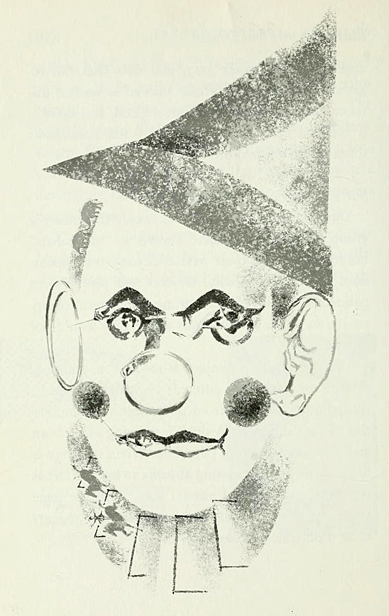
Above Viewed upright, it is a portrait of a clown. Rotate one turn clockwise, and it becomes a circus scene. Ambiguity. Double image. Puzzle picture. Hidden figure. For more on embedded figures and camouflage, go here. Artist unknown, from Larry Kettelkamp, Tricks of Eye and Mind: The Story of Optical Illusions, 1974.

Monday, August 1, 2022

Reginald Marsh / South Pacific WWII ship camouflage

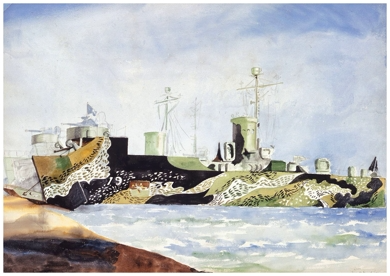
Reginald Marsh, painting of camouflaged ship
Of American artist Reginald Marsh, I know very little. For example, it isn’t clear if he served in the military. Apparently not, and yet on the website of the Naval History and Heritage Command, there are at least thirteen paintings by him that feature US Navy themes.  

One of them, titled The Navy’s Happy Medium, shown above, is a watercolor painting of an LSM (Landing Ship, Medium) ship. It is dated 1944, and is described as having been painted in “South Pacific jungle camouflage.” But did he observe it while on duty in the South Pacific? Perhaps not, since elsewhere he is said to have been an artist-correspondent for Life magazine during World War II, in the course of which he traveled to Brazil to paint scenes of American troops. 

Below (from the Archives of American Art) is a photograph of Marsh, with artists Louis Bouché (center), and William Zorach, most likely prior to WWII, holding what appears to be a WPA-era poster. It is related (if faintly) because Bouché actually was affiliated with wartime camouflage during WWI. Working for the US Navy, he had the same assignment as Thomas Hart Benton—that of making on-site colored paintings of the camouflage on any ships that entered the harbor, whether domestic or foreign.

Reginald Marsh, Louis Bouché and William Zorach


Sunday, July 17, 2022

exhibition video / National Maritime Museum in Brest

Nearly five years ago, we blogged about an exhibition on WWI ship camouflage at the National Maritime Museum in Brest, France. I posted twice about the event (here and here), which opened in October 1917 and continued through December 1918. Titled Razzle Dazzle: L’art contre-attaque!, the installation was designed by the French design firm, Collectif XYZ.

I have recently been notified by the museum’s director, Jean-Yves Besselièvre, that a video about the exhibition is now available online at this link. Reproduced here above and below on this blog page are several screen grabs from the video, including some of the ship models and the dazzle-painted building that houses the design firm.


lowly looking car made quite snappy by paint & brush

AUTO GOSSIP in The Times (Munster IN), February 2, 1920, p. 6—

Old Man Snodgrass, of the Auto Customs Shop, is the adeptest camouflage artist you ever saw. Not boasting at all, but says Art: “People have the doggonest time telling my work from new cars, but the difference is so little few people can tell.” What do you charge, Mr. Snodgrass, for painting a 1914 Lizzie that’s only “went” 211,999 miles? Will she look like new when you get through?

•••

Anon, CAMOUFLAGE USED ON CAR: Lowly Looking Car Made Quite Snappy By Use of Paint and Brush: Wartime Treatment of Shipping Used to Improve Motor’s Appearance, in The Daily Colorist, June 1929—

Does your car look too fat, too tall, too short, or just generally antique?

Cheer up. Just study a few good camouflage methods and you can with paint endow it with the lines of the finest racer. The dress principle that makes stout ladies look thin through vertical-lined clothes works for cars, too.

Camouflag[ing] autos to make them look larger, lower, more luxurious is the job of Captain H. Ledyard Towle, alumnus of Adelphi Academy and Pratt Institute of Brooklyn.

Before the war nothing was known of Captain Towle’s new kind of art. Now he has applied the principles of camouflage…to the painting of automobiles.

“Tommyrot,” the auto manufacturers told him when he first submitted his ideas. “A car is a car. You can’t improve its engine or even its appearance through camouflage.”

But they gave him a chance. He went quietly to work and repainted one model. Its sales increased with astounding rapidity. Now he supervises the painting of millions of them.

He got his ideas during the war. Before that he was a portrait painter. Previous to the age of thirty he had done the portraits of Captain Eddie Rickenbacker and other distinguished persons. Then during the war he acquired a more humble idea of art.

He learned that love of beauty and symmetry is not confined to the upper crust. The ordinary run of soldiers, the small farmer, the street cleaner, everyone, in fact, knows when something beautiful has been set before him.…

One of his experiments affecting the neatness of a car’s appearance consisted of taking a dark-colored car and painting a light strip along its entire length on a level with the top of the radiator.


Saturday, July 16, 2022

charts explaining the purpose of WWI ship camouflage

Cover image showing Everett L. Warner
An odd and totally unexpected find: I’ve run across a person named Robert Gregory Gifford (1894-1962). He was an American portrait painter, who appears to have resided most of his life in New England (West Medford and Duxbury MA), New York City, and possibly in Louisville KY.

During World War I, it appears that he worked with the US Navy’s Camouflage Section in 1917-18 in Washington DC. He can be found in newspaper archives because he was prone to writing letters to the editor. In one of those (in Camouflage and Sea in The Boston Herald, November 19, 1933, p. 10), he writes as follows—

During the World War, I was given special duties by naval authorities in Washington to compose charts explaining the fundamental purpose of camouflage, so that all officers on ships and in army headquarters would not be so befuddled as to what it was all about. Although but just out of my “teens,” I found it to be a very serious hindrance in the conduct of martial affairs to have certain scientific, over-practical officials treat the subject lightly, because their training had precluded knowledge of the subject, when it was essential that pilots know why certain razzle-dazzle designs appeared to throw a vessel several points off her course, and why our aerial bombers did not know something about the uncanny European artistry of obscuring cannon locations and so on.

More complete information about Gifford and his wartime assignment has so far been a challenge. In addition to portrait painting, he was apparently also an etcher, newspaper and magazine illustrator, stage set designer, bookplate designer, teacher, and writer. He seems to have studied at the Boston Museum of Fine Arts, the Fenway School of Illustration, Livingston Pratt Stage Design School, and the New York School of Applied Art.

He registered for the draft on June 5, 1917, in Plymouth County MA, at which time he gave his birth year as 1894, not 1895, as is mistakenly cited in various biographical notes. In a newspaper article (Boston Globe, August 14, 1919, p. 11), his artwork is listed as included in a 1919 Duxbury exhibit which also featured artworks by (among others, including several camoufleurs) Charles Bittinger and Everett Longley Warner, both of whom would have been among Gifford’s supervisors in his camouflage-related work.

Thursday, July 14, 2022

real camouflage would not be visible in a photograph

Emmett Watson (c1932)
Above Cover of Railroad Stories magazine, January 1932, supposedly showing the camouflage of an Allied railroad engine during World War I. The illustration is by Emmett Watson (1893-1955), whose work was widely published in popular newsstand magazines between the World Wars.

•••

Robert K. Tomlin, American engineers behind the battle lines in France. New York: McGraw-Hill, 1918—

It is obvious that this subject [wartime camouflage] cannot be written about in detail. The familiar illustrations often published in magazines and newspapers are the obvious and theatrical ones, seldom used. The real camouflage would not make an interesting picture, because no one would see it in a photograph.

Tuesday, July 12, 2022

taken round back the warehouse and painted brown

Above One of the slides from a talk I’ve given on the Pre-Raphaelite artists of the 19th century, showing how John Everett Millais made use of edge alignment, symbolism, and broken continuity (thereby triggering closure) in his painting titled Christ in the Carpenter’s Shop (1849-50).

•••

As described in a news article, Millais’ grandson was the portrait painter Heskith Raoul Lejarderay Millais, known as “Liony” Millais. His grandmother was of course Effie Gray (well-known for the annulment of her marriage to John Ruskin), and his father was the artist and travel writer John Guille Millais.

Raoul Millais was especially known for his paintings of horses, as was his friend and contemporary Alfred Munnings. Both were outspoken critics of the work of Picasso and other avant-garde Modernists. It is said of Munnings that “When his light grey Arab horse Maharajah was refused boarding to sail to the Boer War ‘for reasons of camouflage,’ he took it round the back of the warehouse and dyed it brown.”

Despite his age, and various physical injuries from hunting, Millais served in the Scots Guards during World War II, in the process of which he commanded the military unit that guarded Rudolf Hess—who “spoke very good English and seemed to be the most unlikely Nazi.”

•••

ARTIST WANTS TO CAMOUFLAGE in Sunday Times (Perth, Western Australia), January 28, 1940, p. 2—

London—One of the artists whose name has been submitted to the [British] War Office for camouflage work is Mr. Raoul Millais, grandson of Sir John Millais, the pre-Raphaelite painter who became president of the Royal Academy.

Mr. Millais has so far specialized in portraits of people and horses. A member of the Beaufort Hunt, Mr. Millais has painted several horses belonging to his fellow followers of the pack.

His most notable horse subject was Blandford, the sire of several Derby winners.

Monday, July 11, 2022

grew out of his interests in color and interior design

William Andrew Mackay
We’ve known about New York ship camoufleur William Andrew Mackay for decades, having researched his life extensively. He was a civilian muralist and designer, and worked for the US Shipping Board during World War I, not for the military, but he was one of first to conduct extensive research on ship camouflage, in advance of the US involvement in the conflict. 

We’ve written and self-published (and made available free online) what is undoubtedly the most detailed account of how he became interested in camouflage, and what he accomplished during the war [see sample page below]. It arose from his interests in color and his extensive experience as an interior designer.
 

Page from essay on Mackay

That said, he remains an enigma in certain respects. For example, we know that he established a somewhat underhanded school (since all ship camouflage at the time was officially required to be designed by US Navy personnel, not by civilians) for wartime ship camoufleurs at his design studio at 345 East 33rd Street in Manhattan. Over time, he worked with at least sixty students, some of whom would become the country’s finest camoufleurs. There is a partial list of those who studied with him, including some who later served under Everett L. Warner at the US Navy’s Camouflage Section in Washington DC.

We have also found a brief article from Arts News (Vol 17, 1918) with the heading Marine Camouflage Course at Columbia, which reveals that Mackay was planning to teach a course on ship camouflage at Columbia University, beginning in mid-November that year. However, the war would end just seven days before the first class meeting, so most likely the class was cancelled. Here is the text of the news article—

Columbia University announces a course in the elements of concealment and disguise as applied to ships. By arrangement with William Andrew Mackay, District Camoufleur of the Energency Fleet Corportion, and under the administration of the Department of Extension Teaching, the university will offer, beginning November 18 next, a course of instruction in marine camouflage, covering a period of twelve weeks.

This course will be open to both men and women.

Artists and mature students in various branches, painters, architects, photographers, advanced art students, poster and advertising artists, students of shipping and ship design, and others of allied qualifications, will be eligible for admission, subject to the approval of the university…

more>>

Sunday, July 10, 2022

standing behind and above, painting faces on his head

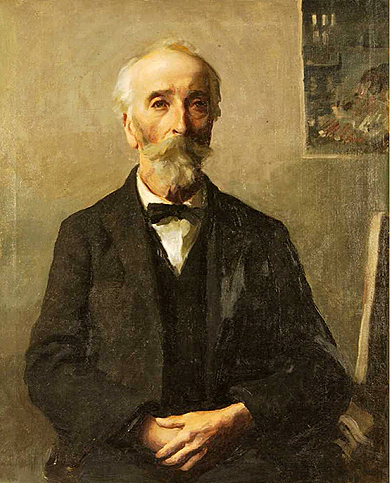
Painting by Frederick Rhodes Sisson (c1920-21)
There is a brief article in The Art Digest (February 15, 1943, p. 26) titled Sisson on Camouflage, which reads as follows—

Amherst College is to hear lectures on camouflage in the Plant Protection School. Frederick R. Sisson, instructor of drawing and painting at the Rhode Island School of Design, who has been conducting a course in camouflage there, to which students of Brown University are admitted, has been chosen for the task. Mr. Sisson acts also as critic of the Providence RI Journal.

We have mentioned Frederick Rhodes Sisson (1893-1962) in two earlier blog posts, here and here, in connection with his role as a studio assistant (one of three) to the well-known American painter Abbott Handerson Thayer. The other two assistants, in the last years of Thayer’s life, were Henry O’Connor, and David O. Reasoner, who would later become Thayer’s son in law, and who was a civilian ship camoufleur during WWI.

It is of particular interest to learn that Sisson lectured on camouflage at Amherst and RISD, since Thayer is regarded as a pioneering expert on protective coloration and natural camouflage, and is commonly referred to as the “father of camouflage.”

Sisson had two connections with RISD. Having grown up in Providence, he was a student at RISD prior to World War I, and then returned to teach there from 1924-1952. He was also an art critic for the Providence Journal from 1932-1950. When he retired in 1952, he moved to Falmouth MA, where he died ten years later.

RISD is at the center of this for another reason, as we have discussed in earlier posts. The Fleet Library at RISD is among the leading archival resources for the research of ship camouflage. One of the WWI American ship camoufleurs, who oversaw the painting of ships in the harbor, was an artist named Maurice L. Freedman. When the war ended in 1919, Freedman entered RISD as a student, and while there, he gave the art school his set of 450 color lithographic plans for American ship camouflage. It is a rare and remarkable resource. More information about it is here.

We also bring this up because, in recent years, there was an online notice about the sale of a painting attributed to Sisson (reproduced above), unsigned and undated, but stamped as part of his estate. It was labeled on the online post as a “3/4 portrait of Abbott Thayer in his later years.” I myself find it hard to believe that this is a portrait of Thayer. Sisson was presumably a capable painter. Indeed, among his responsibilities while working in Thayer’s studio was that of being able to make accurate copies of paintings that Thayer had started. This would then enable Thayer to complete his original painting, as well as apprentices’ copies, in differing ways, without spoiling the original effort.

Knowing that, one would expect a Sisson portrait of Thayer to be a convincing likeness of its aging sitter—which it is to a certain extent. What then is wrong with this picture? The most glaring problem is the hair. Thayer had begun to grow bald at a fairly early age. He had no hair on the top of his head, which prompted his children to refer to him as Shakespeare. Indeed, his bald pate was so hairless at top that his children amused themselves (and him) by standing behind and above him and painting faces on his head. So, one is led to wonder about the indentity of the sitter. The elderly man in the portrait has a receding hairline—that’s for certain—but he is far from bald on top and back.

Wednesday, June 29, 2022

informative new online dazzle camouflage source links

Beginning in 2018, we published four major essays on aspects of World War I ship camouflage. Shown here are the covers (above) and examples of pages (below on this post) as they were prepared for production as printed booklets (not as facing page spreads). Only a small number of these were printed, but they are now available to read online and/or to download in pdf format. The booklets and their online links are as follows—

Chicanery and Conspicuousness: Social Repercussions of World War I Ship Camouflage (2018).
Under the Big Top at Sims’ Circus: Ship Camouflage Behind the Scenes in World War One (2018).
Disruption Versus Dazzle: Prevalent Misunderstandings about World War I Ship Camouflage (2018).
Optical Science Meets Visual Art: The Camouflage Experiments of William Andrew Mackay (2019).


Signed first editions of our three earlier books on the subject are available as a bundle at substantially discounted prices (with free shipping) on Ebay.


An on-going series of new videos on the subject, such as Dazzle Camouflage: What is it and how did it work?, can be viewed on our YouTube Channel, available here.


Tuesday, June 28, 2022

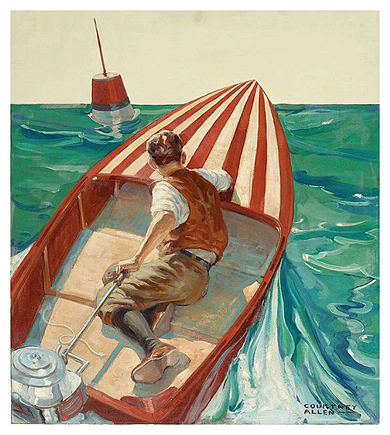
Courtney Allen / Illustrator, Performer and Camoufleur

Courtney Allen
There was an American illustrator and performer named Courtney (Charles) Allen (1896-1969), who was also a camouflage artist.  He was an interesting character, and he surely deserves recognition. Below is information I found some time ago, which I subsequently shared with askART.

When the US entered World War I in 1917, he was working as an artist for the Wilmington Star and the Washington Times. He joined the US Army and served in France as a camouflage artist. A front page article in the Washington Times in 1919 states that 37 officers and 445 camouflage artists have returned to Washington barracks after ten months of overseas service.

Among the returning camoufleurs, the article states, was Sergeant Courtney C. Allen, “former artist for The Times,” as well as five other artists from Washington DC, including Captain E.R. Keane, Private David Rubin, Private James Allen, Private George Park, and Private James O’Shea. Four of the five were pictured in a group photograph in the same issue, titled “Four Washington ‘Camoufleurs,’ Just Back.” The news photograph (including the headshot of Allen below) has not stood the test of time.
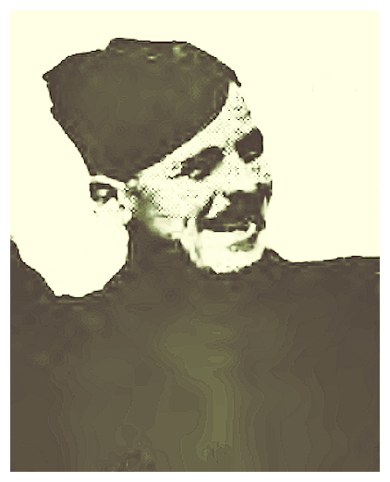
Courtney Allen (1919)


“Sergeant Allen,” the article continues, “was in the fighting at Chateau-Thierry, Soissons, Saint-Mihiel, and at other points along the American line. ‘At Chateau-Thierry we did our best work,’ he said to a Times reporter.”

It may also be surprising to learn that Courtney Allen was also a wildly popular stage musician and comic performer. While studying at Charles Hawthorne’s Cape Cod school, he and five other artists (“all veterans of the World War”) established a popular Provincetown MA coffee house, on Lewis Wharf, called the “Sixes and Sevens,” in which they functioned as the cooks, waiters and entertainers. An article and photograph of the “Big Six” players were published in the Boston Globe in 1920.

In that news feature, Courtney Allen is singled out as especially popular with the crowd. He is, states the article, “variously known among the crowd as ‘Cootie’ Allen and ‘Cuskoo.’” He “is a clever performer with the ukulele and the steel guitar and is kept very busy when the coffee house is crowded—as it has been every evening since it opened.” The raucous new business was seen as a successor to the famous Provincetown Players, who had moved to McDougal Street in Greenwich Village by then.

In August 1921, Allen is mentioned in a Boston Post article as having been a great success at the annual Provincetown Costume Ball. Dressed as “a Japanese coolie,” he received an honorable mention in the costume judging. The Second Prize was awarded to artist Lawrence W. Grant (dressed as a “snake charmer”), who had also served as an Army camouflage artist in France.

For most of his life, he appears to have made his living as a magazine and newspaper illustrator, as in the example shown at the top of this blog post.

Sources

“Camouflage Men Come to Capital” in Washington Times. January 31, 1919, p. 1.

“Costume Ball Like Fairyland” in Boston Post. August 6, 1921.

“Courtney Allen” in Who Was Who in American Art.

Paul Stanwood, “Provincetown Finds Fun at the ‘Sixes and Sevens’ Coffee House” in Boston Globe. July 18, 1920.

Monday, June 20, 2022

a strange, weird-looking, motley camouflaged convoy

Above SS Mona's Queen, a paddle steamer (wearing a dazzle camouflage scheme) at Weymouth, Dorset, UK, c1918 (not one of the ships described in the news report below). Public domain, colorized.

•••

Cruise with a Destroyer Escort, in La Gazette de Hollande, April 13, 1918—

We were in the harbor of a famous Southern port on board the leader of a destroyer flotilla ready to start on one of its ordinary cruises as escort to merchant convoys. It was a cold, bleak, stormy day, with a fine cross sea running in the Channel. One after the other the members of the flotilla cast off from the buoys, and slipped silently seaword. In the outer harbor were the huge merchantmen we were to escort into the comparative safety of the broad Atlantic. They were a strange, motley-looking crowd, with a camouflage appearance of the weirdest description, calculated to send Futurist artists into ecstasies. These weird-looking vessels followed the destroyers in single file out of harbor at slow speed until well out into the Channel. There they were formed up and made into as compact a crowd as possible. A destroyer in front and others on each flank constituted a protective screen. After we had got well out and had lined up our escort full speed ahead was ordered, but that was full speed for the convoy only. The destroyers were at about halfspeed, and this was partly expended in zig-zagging. To and fro, without a moment’s respite, the leader proceeded in front of the convoy, always about 500 to 600 yards ahead, as though showing to timid followers that it was perfectly safe to follow where we led. On the flanks other destroyers kept up the same zig-zag procedure, and astern yet another zigged and zagged and did her best to keep the rearmost ships up to the full convoy speed.

Sunday, June 19, 2022

Arcimboldo, Grandville and William Charles Morris


William Charles Morris
Aha, I have recently run across the work of an American political cartoonist named William Charles Morris (1874-1940). I don’t know if he had any interest or involvement in camouflage per se, but there are examples of his work in which he used visual puns, visual metamorphosis (in the manner of Grandville), and spelled out words with figures.

Given the era he lived in, one of his favorite subjects was US President Theodore Roosevelt. TR had squinty eyes, an arched moustache, and prominent teeth, and Morris made a portrait of him (as he was seeking a third term in office) in which his face becomes the White House, his teeth having “evolved” into pillars. In a cartoon titled “Rabbit Hunting,” the slogan SQUARE DEAL is spelled out by rabbits in the background. 

Rabbit Hunting

Morris also made a drawing, titled “Hi$ Late$t Picture: The Northwe$tern Farmer,” in which he used shape substitutions and visual puns, like those of Arcimboldo.

To my mind, Morris was at his finest when he created a pun-laden portrait of railroad executive E.H. Harriman (as shown above), titled “The Colossus of ‘Roads.’” From our earlier years, we clearly remember Harriman’s son, New York statesman Averell Harriman.

See also the well-known “living photographs” of Arthur Mole and John Thomas at, and a short film discussion of embedded figures.

Prosperity Personified

Wednesday, May 25, 2022

Krazy Kat, Worden Wood, and WWI Ship Camouflage

George Herriman (1904)
Of late I have been reading a book about the American cartoonist and comic artist George Herriman, best known as the author / illustrator of Krazy Kat. I recently received the book as a gift from a friend, former student and colleague, Wisconsin artist Craig Ede. The book, which was written by Michael Tisserand, is Krazy: George Herriman: A Life in Black and White (HarperCollins, 2016). It is wonderfully detailed and well-researched.

One of its illustrations is reproduced above. It’s a Herriman cartoon that appeared in the New York American on May 3, 1904. It’s an early example of a kind of visual stop-motion effect, which calls up memories of the photographic experiments of Étienne-Jules Marey and Eadweard Muybridge, as well as certain aspects of Italian Futurism, subjects that I’ve blogged about before.

I was surprised to learn about Herriman’s link to Arizona and the Navajo, and about his friendship with John and Louisa Wetherill, who were prominent trading post owners. There is a possibility that, through them, he may have been acquainted with my relatives, the Newcombs, who owned various trading posts on the Navajo reservation in New Mexico.

Also, I was not far into the book when I ran across the name of Worden Wood, a fellow cartoonist and associate of Herriman. I have earlier blogged about Wood, because he served as a ship camouflage designer during World War I. Earlier, he had been in the Naval Reserve during the Spanish-American War, and, following that, had participated in General John J. Pershing’s pursuit of Pancho Villa. He rejoined the Naval Reserve in 1917 and soon after was assigned to ship camouflage.

A search of vintage newspapers reveals that Wood was injured in a car accident in August 1916, when he ”undertook to dispute the right of way with a six cylinder car.” Later that month, while serving near El Paso, he rode his horse Cleopatra to town to buy a jar of raspberry jam. But the horse stumbled in the dark, and the jam jar shattered, leaving stains of red preserves on Wood’s uniform and hands. As a practical joke, when Wood arrived in camp that night, he acted as if he were wounded. The medic was called, and it was soon discovered that the blood was jam. 

Two months earlier, he had prevented a dog from being severely beaten by its owner, when he grabbed the owner’s cane and broke it into pieces. No doubt, his life was eventful.

Sunday, May 22, 2022

exhibition of hypothetical ship camouflage patterns

hypothetical camouflage schemes
Opening soon on May 24, 2022 (in the coming week) is a major gallery exhibition at the University of Wisconsin at Madison, which continues through June 24. Titled EVOLVING GRAPHIC DESIGN, it showcases the work of twenty-three graphic design professionals and design educators from throughout the nation. Represented is the widest variety of graphic media, including themes, research and techniques that extend beyond traditional prints on paper.

The exhibit’s originator, organizer and curator is Yeohyun Ahn, Assistant Professor of Graphic Design and Interactive Media, in the Graphic Design Program, UW-Madison Department of Art. Detailed information about the exhibition is online here.

I am pleased that my work is included in two components of the exhibition. In one will be exhibited a series of ten large-scale digital montages, called the Iowa Insect Series, that I made in 2012-2013 in collaboration with design colleague and friend David M. Versluis. Having retired from teaching recently, he now resides in Michigan. But at the time, he was a Professor of Art and Design at Dordt College in Iowa, while I was then on the faculty at the University of Northern Iowa. 


These works began with David’s high definition digital scans of various insect specimens from his collection. We worked together by what might be referred to as “blind collaboration.” To begin, he would email me one of the insect image scans. I then did something to alter or augment that image (somewhat like a move in chess), and returned the result by email to him. He then made additional alterations, and sent that second result to me. We continued blindly, back and forth, exchanging subsequent alterations, until we both began to sense that the work was nearing completion. We did this on ten occasions. All ten will be exhibited in the UW-Madison exhibition. No doubt the effect will be stunning.


In another area of the exhibition, I will also be exhibiting thirteen design-related images that are part of my long-term, continuing research (as a design historian) of World War I Allied naval camouflage. The theme uniting these artifacts is high difference or disruptive ship camouflage, which was referred to at the time as dazzle painting or dazzle camouflage.

Among the items exhibited are restored government photographs from the time period, full-color reproductions of diagrams of the camouflage patterns, and my own recent hypothetical camouflage schemes, derived from historical works of art.

 See examples, reproduced above.

A highlight of the exhibition will be a symposium, titled Evolving Graphic Design, to be held on June 23 and 24, in the Art Loft Conference Room, Art Lofts Building, in the Department of Art, University of Wisconsin-Madison at 111 North Frances Street, in Madison. I will participate in that symposium, by online presentation.

Friday, April 22, 2022

Picasso on camouflage / we originated it with cubism

Cook: The Man Who Taught Gertrude Stein to Drive
Above Roy R. Behrens, Emeritus Professor of Art at the University of Northern Iowa and Independence (Iowa) native has released a new 60-minute online documentary film about Iowa expatriate artist William Edwards Cook, and his close long-term friendship with American writer Gertrude Stein.

•••

Gertrude Stein (speaking in the pretended voice of Alice B. Toklas), The Autobiography of Alice B. Toklas. New York: Harcourt Brace, 1933—

[In 1907, Pablo Picasso went back to Spain for the summer] and he came back with some spanish landscapes and one may say that these landscapes…were the beginning of cubism.…

…In these pictures he first emphasized the way of building in spanish villages, the line of the houses not following the landscape but cutting across and into the landscape, becoming undistinguishable in the landscape by cutting across the landscape. It was the principle of the camouflage the guns and the ships in the war. The first year of the war, Picasso and Eve, with whom he was living then, Gertrude Stein and myself, were walking down the boulevard Raspail a cold winter evening.…All of a sudden down the street came some big cannon, the first any of us had seen painted, that is camouflaged. Pablo stopped, he was spell-bound. C’est nous qui avons fait ça, he said, it is we that have created that, he said. And he was right, he had. From Cézanne through him they had come to that. His foresight was justified.

RELATED LINKS    

Dazzle Camouflage: What is it and how did it work?Nature, Art, and Camouflage / Art, Women's Rights, and CamouflageEmbedded Figures, Art, and Camouflage / Art, Gestalt, and Camouflage /  Optical science meets visual artDisruption versus dazzle / Chicanery and conspicuousness /  Under the big top at Sims' circus